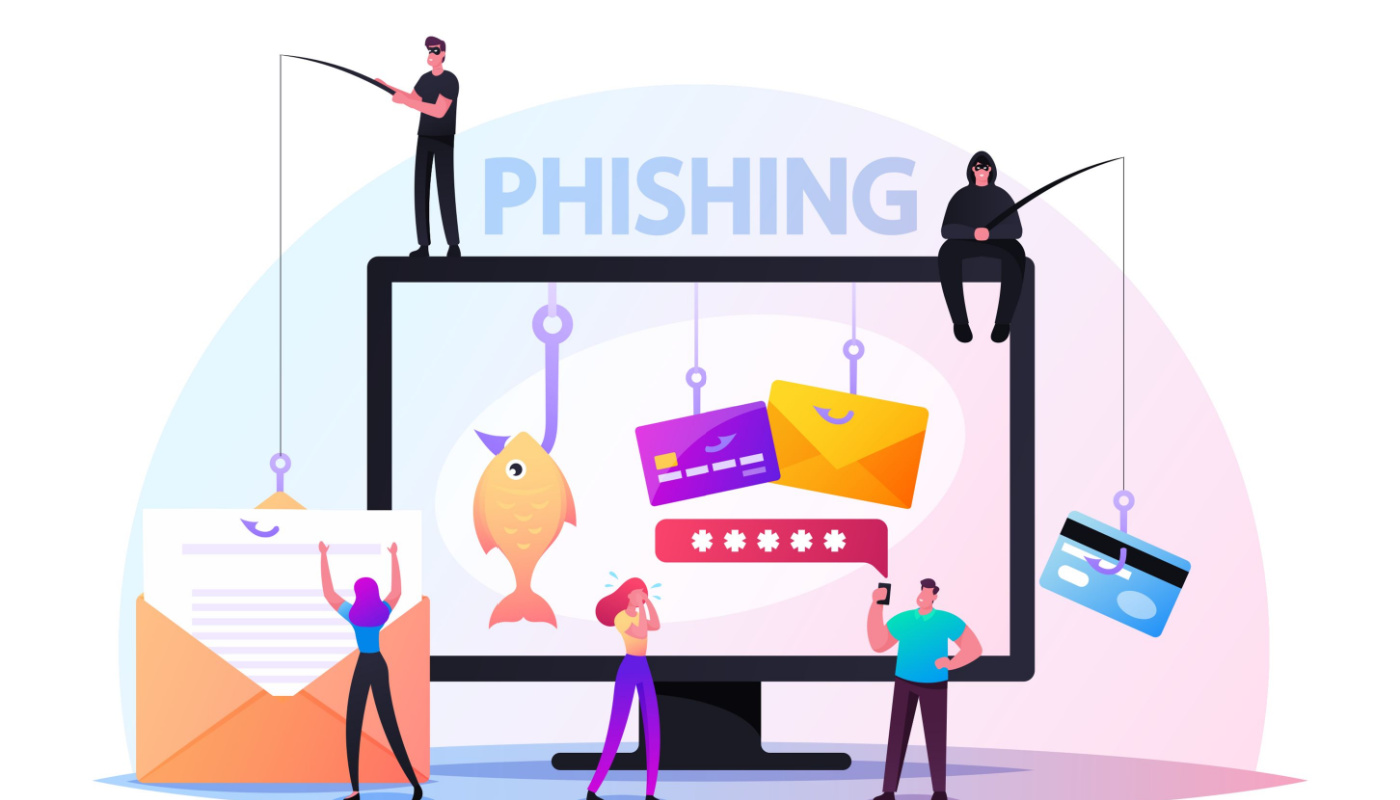
Trap phishing is a type of targeted phishing attack that uses trust to deceive victims into clicking malicious links or downloading infected attachments. Once triggered, these actions can expose personal data, financial information, or give attackers remote access to a system.
Learn more about remote access trojans
For instance, you might receive an email at work that appears to be from your bank asking you to verify account details. Clicking the provided link can either:
- Download malware that grants attackers access to your computer and company network.
- Direct you to a fake but convincing website that steals your login credentials.
Once attackers obtain your data, they can launch follow-on attacks involving identity theft, financial fraud, or ransomware.
Trap Phishing vs. Phishing
Both phishing and trap phishing aim to steal sensitive data such as passwords, financial details, and account information.
Phishing typically involves mass emails sent to large groups, pretending to be from trusted organizations. Victims are tricked into entering credentials on fraudulent websites or downloading malicious attachments.
Trap phishing, is more targeted. Attackers research their victims – often by role, company, or interests – to craft messages that feel credible.
For example, an employee in finance might receive a message appearing to come from a senior executive requesting urgent financial data. The specificity makes the deception far more convincing.
How Trap Phishing Works
To protect yourself, it is important to understand how criminals use trap phishing.
Identifying the lure
Attackers study their victims to come up with lures victims would find hard to resist. Typical examples include fake job offers, gift cards, or warnings about security breaches.
The set-up
After identifying the lure, cybercriminals then set up the trap. They can create a legitimate-looking fake website and send an email that appears to be from a trusted source. They aim to get the target to enter their login credentials or other sensitive information. The trap can also involve a malicious attachment or link in the email that installs malware on the victim’s device.
Data theft
If a victim falls into the trap of clicking on a malicious link, the cybercriminals can steal their data. The criminals can
- Use the stolen information to access the victim’s accounts or steal their identity
- Use the compromised device to launch further attacks on other targets
- Sell the data to other criminals
How to Protect Your Business From Trap Phishing
Here are preventive measures to protect your business from trap phishing attacks.
Education and awareness
Targeted and data-driven training is essential to educate your employees about attackers’ tactics. Your employees must be aware of the common types of trap phishing attacks and the methods phishers use to trick victims. Regular training sessions can help your employees stay vigilant and avoid falling victim to these attacks.
Use of security software
Security software, such as antivirus and anti-malware, is essential for preventing trap phishing attacks. Using a secure email gateway can help filter out spam and phishing emails.
Regular updates and backups
Keep your operating system, software, and security software up to date to patch vulnerabilities attackers can exploit. Regularly backing up your important data can help you recover from a phishing attack without losing valuable information.
Simulated phishing attacks
Use periodic simulated phishing attacks to gauge the effectiveness of training programs and cybersecurity software. These test attacks can help you identify weaknesses in your systems, which you can eliminate. Such measures can also help your business stay updated with attackers’ latest tricks and tactics.
Using Automation to Defend Against Trap Phishing
In addition to traditional trap phishing attacks, businesses must implement the latest technology that deals with emerging phishing tactics that utilize AI and machine learning (ML) to disguise, speed up, and automate attacks.
Automation can augment human efforts and provide real-time, proactive security measures to defend against trap phishing.
At Bolster, we help organizations defend against all phishing attacks by detecting and taking down phishing and scam sites. We will automatically alert your team and initiate takedowns when potential threats are detected.
To learn more about how Bolster can help your business defend against trap phishing attacks, request a demo with our team today.