
Telegram promotes itself as a fast, modern cloud-based messaging platform with more than 1 billion active users. Privacy is its calling card. People can enable end-to-end encryption, lock chats, and even set messages to self-destruct.
That said, those same features also make Telegram fertile ground for fraudsters.
Scammers want you to use Telegram because:
- Anonymous accounts require little personal information
- Encrypted conversations block security tools from detecting malicious content
- Public groups and channels are large enough for wide-scale fraud distribution
- Lookalike communities and support rooms resemble legitimate organizations
- Bots are capable of imitating customer support and conducting phishing interactions
And it’s not just a scam here or there. Scammers use these traits at scale. Public groups and channels become easy places to distribute phishing links, sell stolen data, or build convincing lookalike communities that appear authentic at a glance.
Fraudulent product discussions, support rooms, and promotional channels often lure people in before the scam becomes visible. Some groups rely on Telegram bots that mimic support agents, leading victims toward phishing flows that resemble real customer service.
Knowing how these tactics work is essential to avoiding them.
How To Protect Yourself Against Telegram Scams
1. Learn the signals of a scam
Scammers frequently create channels that borrow logos, branding, and naming conventions from legitimate companies. These setups can look convincing, with active discussions and seemingly helpful posts.
Before you trust anything presented as “official,” confirm through the company’s real website. If a support agent, bot, or channel initiated the contact, treat it as unverified until proven otherwise.
2. Use Telegram’s security controls
Several built-in features reduce your exposure to scams on Telegram:
- Enable two-factor authentication to prevent unauthorized account access.
- Add a Passcode Lock so no one can open Telegram if they gain access to your device.
- Adjust Privacy and Security settings to hide profile information from strangers.
- Block or report anyone who behaves suspiciously.
These controls limit unsolicited outreach and keep your account harder to compromise.
3. Keep sensitive information out of Telegram
Encryption protects messages from being intercepted, but it does nothing to protect you if you share information with a scammer. Never provide payment details, identity documents, one-time codes, or account credentials through Telegram. Legitimate organizations will not ask for them in this manner.
4. Verify any group, channel, or support contact
Scammers rely on lookalike channels that appear identical to legitimate ones. Before joining or interacting:
- Match the channel link with the one listed on the company site.
- Review prior public statements from the company to confirm they actually operate a Telegram presence.
- Treat unsolicited offers, discounts, or requests for payment as red flags.
Leaving early is always safer than engaging with an unverified space.
5. Be cautious with bots
Bots can convincingly mimic real support interactions. If a bot asks for sensitive information or directs you to high-pressure payment steps, stop immediately.
Taking Down Scams on Telegram
Telegram’s encryption prevents any vendor from reviewing or removing content inside private chats. However, large portions of scam activity take place in public groups and channels. These open spaces are a major source of phishing schemes, impersonation attempts, counterfeit product sales, and general fraud.
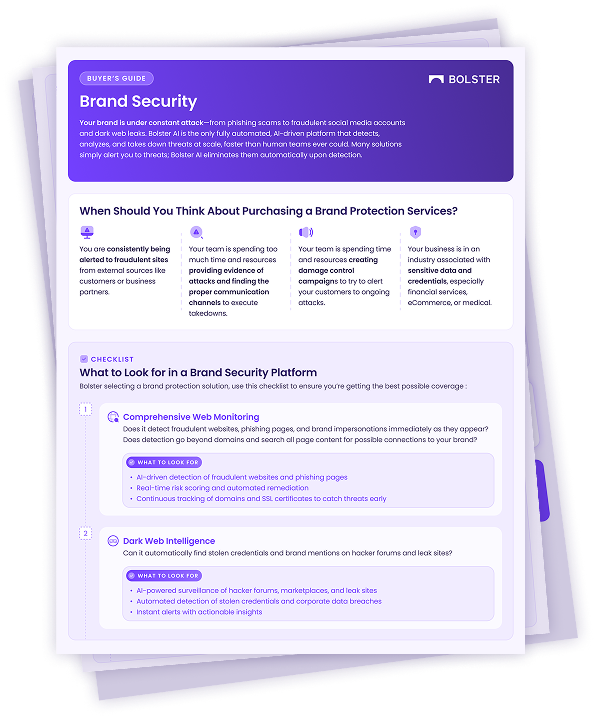
Monitoring these public forums has become an important part of digital risk protection. Bolster’s platform is built to detect scams on public Telegram channels, analyze them, and remove them through a technology partnership with Telegram. Traditional brand-protection vendors often depend on blacklists or manual reporting, which can delay removal by 10 to 12 days. Faster takedown reduces exposure for both individuals and organizations.
Bolster’s approach shortens that window and helps reduce the risk created by fraudulent activity circulating through Telegram’s public communities. Request a demo.